The Matching Kit Myth: Teams Need Not Look Identical
Matching kit helps a recreational team look organised, but a shared colour, bib or armband can identify players without demanding identical clothing.
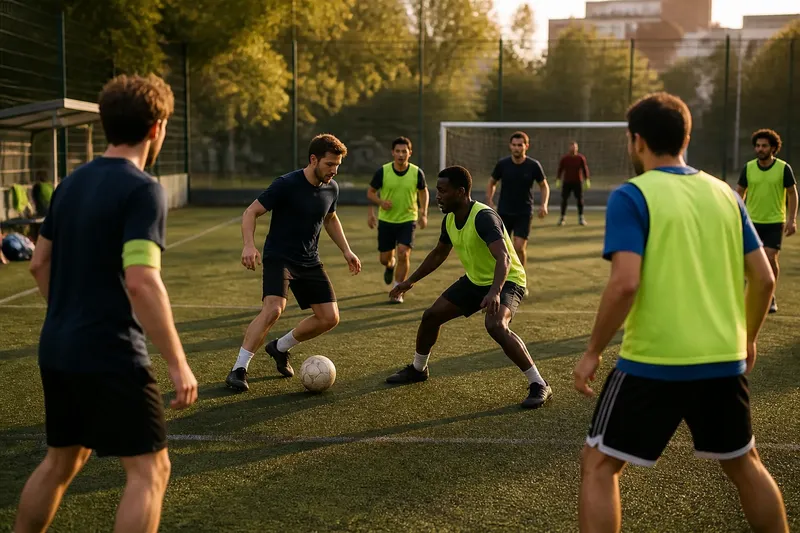
A recreational team can look organised without matching kit: one shared colour, a bib or a clear armband can identify players while leaving room for different clothes. The useful question is not whether everyone wears the same shirt, but whether teammates and opponents can tell who is playing for which side.
That distinction matters when people arrive from work, borrow equipment, play in mixed-age groups or join for a single session. Treat team identity as a practical signal, then build it into the ordinary routine of getting ready to play.
Choose one signal before choosing a uniform
A team identifier should be easy to spot during play and simple to arrange. A shared colour is often enough if players already own suitable tops. When the two sides wear similar colours, reversible bibs, coloured armbands or light training vests can make the distinction clearer.
Uniformity is a different choice. Matching shirts, shorts and socks may suit a club that wants a formal appearance, but they bring extra decisions about sizes, changing conditions and who keeps the kit between sessions. Those details do not automatically improve recognition on the field.
Start with the least complicated option that makes the teams distinct. Think of it like labelling two lunch boxes: a clear mark matters more than identical containers. If the mark disappears under a coat, blends into the background or is hidden by a player’s position, choose a more visible one.
Use a week to settle the team’s kit routine
For a group that meets regularly, a short routine can establish what is useful without turning clothing into a rulebook. Give the group time to try a simple identifier in ordinary conditions, then adjust it if it causes confusion.
Before the first session, ask what players already have
Send a brief message asking players to bring a top in one agreed colour if they own one. Name a fallback, such as a bib or armband, for anyone without that colour. Avoid implying that someone must buy clothing just to take part.
Also ask whether anyone needs a different layer for comfort or movement. A team can share a colour while allowing long sleeves, suitable sportswear and weather-appropriate clothing to vary.
At the first meeting, assign sides in plain language
Before play begins, say which colour belongs to which side and show the backup identifier. Put the bibs or bands where players can reach them, rather than relying on one person to remember who needs one.
Check the distinction from the edge of the playing area. If two colours look alike at a glance, or a band is difficult to see, switch one side to the backup. A quick visual check is more useful than assuming everyone will recognise the arrangement once play is moving.
After the session, ask what caused hesitation
Keep the conversation concrete. Did a player mistake an opponent for a teammate? Was a bib uncomfortable over another layer? Did people arrive in the agreed colour without being reminded? These answers help the group distinguish a real problem from a preference for matching clothes.
Say you have a casual five-a-side group where several players own dark tops, while others arrive in mixed colours. The organiser could make dark tops one side’s signal and provide bright bibs for the other. The expected visible result is two distinguishable groups without asking anyone to replace a usable top.
Keep the identifier clear across changing conditions
A colour that works in bright daylight may be harder to distinguish in shade, under indoor lighting or against the playing surface. Look at the actual venue and consider the likely clothing people will wear, rather than choosing colours from a screen or catalogue alone.
Contrast matters more than a polished palette. Two shades that seem different in a shop can appear close at a distance. Pair one with a noticeably different colour or use bibs that sit visibly over the player’s clothing. If a sport or venue has specific kit rules, check the relevant instructions once before settling the arrangement.
Keep the identifier in a consistent place where possible. If the team uses armbands, players should wear them on the same side or in an equally obvious position. If bibs are used, make sure they fit over the range of tops people bring. A signal that shifts or disappears during play is a poor signal, however attractive it looks before the game.
Let comfort and access shape the shared choice
People do not all own the same sportswear, and a recreational group should not confuse belonging with buying a matching outfit. Agree on a visible feature, then let players use what they already have wherever it meets the practical needs of the activity.
Offer a loan option for people who need it. A small supply of washable bibs or spare bands can cover visitors and players who arrive without the agreed colour. Decide who brings them and where they go after play; otherwise, the shared identifier can become a last-minute scramble.
Leave room for layers and personal requirements. A player may need a long-sleeved top, a particular fit or clothing that supports comfortable movement. The team can preserve its shared identity with an outer bib or another visible marker instead of asking everyone to dress alike.
When does a shared kit rule help?
Do all players need the same shirt?
No. They need a clear way to recognise teammates, and one colour or a visible marker may do that. Matching shirts are an optional choice when the group values the appearance and can arrange them without excluding anyone.
What can a team use instead of matching kit?
Try a shared shirt colour, reversible bibs, coloured armbands or training vests. Choose the option that stays visible during the activity and is straightforward for players to borrow or bring.
What should happen when both teams wear similar colours?
Give one side a visibly contrasting identifier before play starts, such as bright bibs over their usual tops. Confirm the distinction at the venue rather than relying on a colour name that may look different in the lighting.
How can a group include occasional players?
Explain the colour arrangement in the session message and keep a few spare identifiers with the group’s equipment. A visitor should be able to understand their side and join in without needing to buy a uniform.
Review the arrangement after a few sessions
Once the group has used its identifier several times, check whether it remains clear and easy to manage. Ask players whether they could recognise each side quickly, whether the kit was comfortable and whether anyone struggled to access the agreed option. Change only what is getting in the way.
If the group later chooses matching shirts for a tournament or club occasion, keep the existing fallback for people who cannot wear or obtain one. A shared colour, bib or armband can still do the essential work: show who is on the team. Matching kit can add a sense of occasion, but a clear, accessible identifier is what lets recreational players take the field together.